Speakers
Keynote Speakers
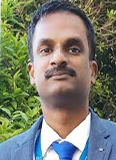
Prof. Jude Hemanth
Department of ECE, Karunya University, Coimbatore, India
Title: TBD
Experience:
Prof. Jude Hemanth is working as Professor in Department of ECE, Karunya University, Coimbatore, India. He also holds the position of “Visiting Professor” in Faculty of Electrical Engineering and Information Technology, University of Oradea, Romania. He has authored more than 150 research papers in reputed SCIE indexed International Journals and Scopus indexed International Conferences. His Cumulative Impact Factor is more than 250. He has published 37 edited books with reputed publishers such as Elsevier, Springer and IET. He holds professional membership with IEEE Technical Committee on Neural Networks (IEEE Computational Intelligence Society) and IEEE Technical Committee on Soft Computing (IEEE Systems, Man and Cybernatics Society) and ACM.
Assoc. Prof. HILAL Imane
School of Information Sciences/ Department of Data and Knowledge Engineering,Morocco

Title: Recent trends in cloud computing applications and challenges in industry and research
Abstract:The increasing use of Cloud computing due to the actual pandemic worldwide situation, and the enormous evolution of its services to meet the lockdown requirements, has caused many issues and challenges. in parallel, the volume of Big Data is exponentially growing, making its use for analytics purposes complex and problematic. Moreover, the quality of the captured Data impacts directly its analytics. In fact, if the data is not available, reliable, confidential, integral, and maintainable, the resulting decisions will be incoherent, biased, Or/And illegal. Therefore, to conduct successfully a Big Data project, it is necessary to dispose of data that meets the dependability requirements and to select a suitable cloud service to process it correctly.
The main objective of this talk is to present our work which focuses on providing a solution to the problem selection of the pertinent cloud service adapted to dependable Big Data. However, many trends and challenges will be discussed to open new horizons for researchers and industrials
Experience:
Dr. HILAL Imane is an Associate professor at the Department of Data, Content, and Knowledge Management of the School of Information Science (ESI), Rabat, Morocco. She Graduated from ENSIAS, University Mohamed V in 2009 as IT Engineer she got a Ph.D degree from University Hassan II in 2016. Passionate about computer science, she has been teaching IT for more than 10 years. During 2020, she got two professional certifications in cloud computing from Oracle and Huawei and a professional certification in Artificial intelligence (AI) from Huawei. She is currently the chair of the ASIS&T Africa Chapter, and the treasurer of the Research Center on Information and Data Science (RCIDS) hosted in ESI Rabat. She was involved in the organization of many International Scientific Conferences: SyscobIOTs19, ICSSD’19, SADASC'20, and ICSSD’21. Her main research areas are Cloud computing, E-healthcare, E-Learning, Decision support systems, and software dependability. She is a permanent reviewer in the International Journal of Computer Engineering and Data Science (IJCEDS), AiScholar and Editor Board member in InformationMatters.
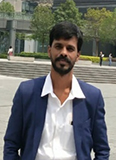
Assoc. Prof. & Director, Jaishankar Bharatharaj
Bharath Institute of Higher Education and Research, India
Title: Robots in Healthcare targeting Therapy and Companionship
Abstract:The increasing deployment of robots in recent decades has inspired new boundaries for human-robot interactions from manufacturing to health industries. Particularly, assistive robotics has found new directions in recent years and been used in numerous applications, including, elderly care, and autism therapy. With inspiration from nature, bio-inspired robots can provide solutions to various problems, which have been applied successfully in real-world situations. Specifically, animal-inspired robots have received notable acceptance in therapeutic and companionship settings, such as therapy for the elderly, children with autism spectrum disorder, and patients with dementia. A number of animal-like robots are developed to provide the benefits of animal-assisted therapy, while overcoming shortfalls, such as biting, allergies, and animal-spread diseases. Autism therapy is one such area for the deployment of animal-inspired robots to improve the lifestyle of children with autism spectrum disorder.
This keynote speech will discuss on robots in healthcare settings focusing on the benefits of the design and development of biologically inspired robots targeting companionship and therapeutic benefits including, learning, social interaction, and stress reduction.
Experience:
Jaishankar completed a B.Sc. and M.Sc. in Computer Science and Information Technology respectively. During his PhD at AUT (New Zealand), Jaishankar developed a parrot-inspired robot to improve learning and social interaction of children with ASD. His research has also proved to reduce stress levels of children with ASD through interaction with the parrot robot. He holds certification in quantitative research methods and engineering design methods.
Jaishankar’s research interests are in healthcare robotics and investigation into the design and development of biologically inspired robots for therapeutic and companionships to human stakeholders. He is a co-founder of the PAIR LABS (India and New Zealand) that investigates the psychosocial aspects of robotics among various stakeholders across the globe.
Dr Bharatharaj is Section Editor, Review Editor, and Reviewer of high-quality journals in Springer, Frontiers, and IEEE transactions. He is also serving a member of several international conferences.
§ Jointly investigating with Harvard University, USA on replication of parrot behaviors and cognitive abilities to parrot-inspired companion robot.
§ Developing telepresence robotics for children with autism using AVATAR in collaboration with Tufts University and Empowered Brain Institute, USA.
§ Investigating the psychosocial aspects of various stakeholders including future robotics workforce, parents, teachers, school children, medical professionals, and members of Indian parliament.
§ Developing a wearable parrot-inspired companion robot for children with autism, and elderly.
§ Developing a companion robot for medication reminder.
§ Developed UVC equipped semi-autonomous robot to fight COVID and disinfect healthcare environment.
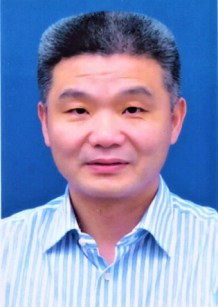
Prof. Gangmin Ning
Dept. of Biomedical Engineering, Zhejiang University
Title: Machine Learning Aided Computational Model for Cardiovascular System
Abstract:A computational model for the cardiovascular system was developed to mathematically represent vital physiological features of circulatory system in macro and micro scale. With the aid of machine learning the model was trained by few uncompleted data to reflect the overall structure and function of the circulation network. Key technical issues such as coupling of models with different dimensions and modules have been addressed. It can be used to simulate and analyze various scenarios, such as blood pressure, distribution of blood flow, pulsatility in circulation and other function related factors. The computational model helps gain a deeper understanding of the underlying mechanisms of cardiovascular system.
Experience:
Professor Gangmin Ning is with the Department of Biomedical Engineering, Zhejiang University, China. He received his Bachelor of Science and Master of Science in Biomedical Engineering from the Zhejiang University, China in 1987 and 1990, respectively. In 2001, he obtained Dr.-Ing in biomedical engineering from Ilmenau Technical University, Germany. He also serves as the deputy director of the Engineering Research Center for Electronic Medical Records and Intelligent Expert Systems of the Ministry of Education of China, and the chief supervisor of the China Microcirculation Society. His research interests include the computational modelling in physiological system, machine learning for medical application, and mobility ability enhancement technology for elderly adults.
Prof. ZhiYong Luo
Central South University
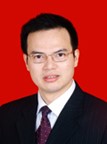
Title: TBD
Experience:
Doctor of Biochemistry and Molecular Biology, professor and doctoral supervisor of the Department of Molecular Biology and the State Key Laboratory of Medical Genetics, School of Life Sciences, Xiangya Medical College, Central South University, director of the Collaborative Innovation Center for Efficient Utilization of Medicinal Plant Resources and New Drug Discovery, Central South University, and PI of the Research Group for Tumor New Drug Discovery and Natural Product Synthesis Biology. Changsha Lugu National High-tech Zone Innovation Leading Talent Plan Candidate, Hunan Provincial University Discipline Leader and 121 Talent Project Candidate, Central South University Biochemistry and Molecular Biology and Plant Discipline Leader, Senior Visiting Scholar, Cancer Research Institute, Indiana University School of Medicine. Peer review by the Medical Department of the National Natural Science Foundation of China (Oncology, Pharmacology, and Traditional Chinese Medicine) and the Department of Life Sciences (Botany, Biochemistry, Molecular Biology, and Chemical Biology), expert reviewers of the National Science and Technology Award, and reviewers of various international academic journals, as well as the keynote speaker of the video open course of the National Quality Course and the National Quality Resource Sharing Course "Medical Molecular Biology".
He is also a member of the Professional Committee of Medicinal Plants and Botanicals of the Chinese Botanical Society, a member of the Professional Committee of Plant Metabolism of the Chinese Society of Plant Physiology and Molecular Biology, a vice chairman of the Hunan Botanical Society, a member of the Expert Committee of the Hunan Pharmaceutical Industry Association, and a director of the Hunan Biochemical and Molecular Biology Society. Department of Biochemistry and Molecular Biology at Central South University during the "Tenth Five Year Plan" to "13th Five Year Plan" period is the backbone and leader in the construction of key disciplines at the provincial level. From July 2010 to July 2017, he served as the Vice President of the School of Life Sciences of Central South University, in charge of scientific research, disciplines, and graduate work.
The interdisciplinary research of "discovery of new tumor drugs and practice of synthetic biology of natural products" has attracted wide attention at home and abroad, and has been invited to make more than 40 invitations and theme reports at professional academic conferences at home and abroad in colleges and universities such as Peking University School of Pharmacy, the Second Military Medical University, the Chinese Academy of Traditional Chinese Medicine, Kunming Institute of Zoology, Chinese Academy of Sciences, etc.
He has successively obtained and undertaken 7 National Natural Science Foundation projects and multiple provincial and ministerial key projects. He has long been engaged in research on "the synthetic biology of secondary metabolites from medicinal plants and the discovery of new anti tumor and anti aging drugs". On the one hand, it focuses on the research on the biosynthesis, transportation, and regulation of medicinal triterpenoid saponins, known as "the king of medicinal plants", and newly discovers ginsenoside synthesis, transportation proteins, and transcriptional regulators; On the other hand, more than 400 new structures have been synthesized using natural small molecules such as ginsenosides, procycline, and curcumin as lead compounds, obtaining 10 highly active anti-tumor and anti aging candidate drugs with independent intellectual property rights, and revealing new discoveries in target and signaling mechanisms. This research achievement has important industrialization prospects in large-scale pharmaceutical applications in natural drug synthesis biology, tumor and aging related diseases prevention and treatment, and has been granted 18 national invention patents. Int J Cancer, Oncotarget, Scientific Reports, Molecular Biology Reports, Int. J. Mol. Sci., who have had influence at home and abroad, have published more than 60 papers such as SCI, and 1 second prize for natural science in Hunan Province. Currently guiding 4 doctoral students and 6 master's students; 7 doctoral students and 20 master's students have graduated
Currently, we have conducted extensive academic exchanges and cooperation with Professor Luo Junli of the Cancer Biology Laboratory of the SCRIPPS Research Institute in the United States, Academician Huang Luqi of the Chinese Academy of Traditional Chinese Medicine, and Professor Xie Daoxin of the School of Life Sciences of Tsinghua University.